

We must explain to you how all seds this mistakens idea off denouncing pleasures and praising pain was born and I will give you a completed accounts off the system and expound.
Tooth impaction is a condition when the tooth is not able to erupt fully into its proper position due to various reasons such as lack of space in the jaw, misalignment, or blockage created by the neighboring teeth, bone, or gums. While any tooth can become impacted, wisdom teeth (third molars) and maxillary canines (upper jaw cuspids) are the most affected.
Surgical extraction of wisdom teeth or third molars is a minor procedure and is usually recommended depending on the severity of the symptoms and complications associated. However, canines/ cuspids play an important role in the mouth, hence, the dentist will try and a make a way for these teeth to erupt instead of removing them.
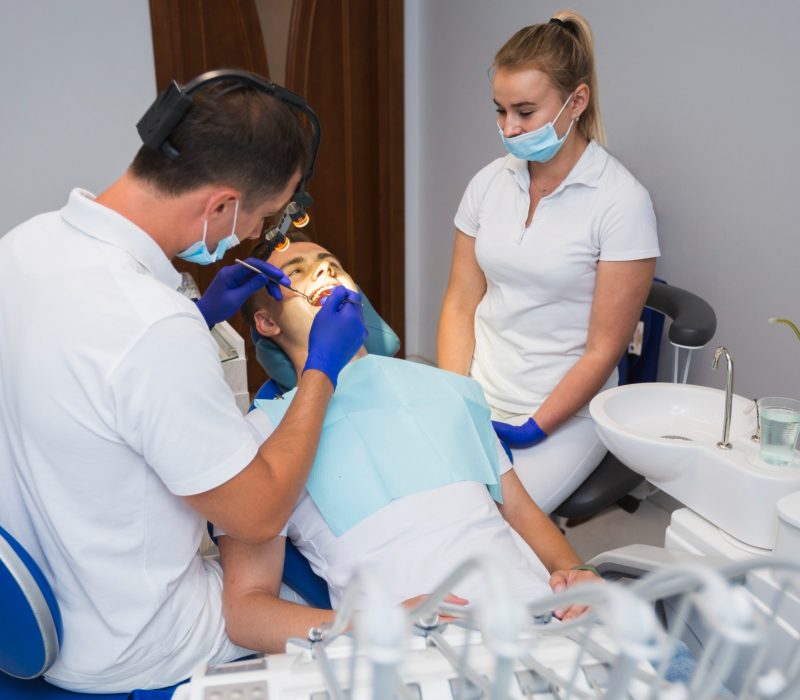
Dental Crown And Dental Bridge

2. Angular (Mesioangular or Distoangular)
• Mesioangular – Tilted forward toward the front of the mouth (most common).
• Distoangular – Tilted backward back of the mouth (less common and more complex to remove).
Both mesioangular and distoangular impactions can cause damage to the neighboring teeth, in the form of decay or misalignment.
3. Vertical Impaction
In this type, the tooth is upright and is stuck in the bone and gums due to lack of space or obstruction and might require extraction if symptomatic.
4. Soft Tissue Impaction
When the impacted tooth is partially covered with gum tissue and is difficult to maintain hygiene. Such cases might cause infection in the gum tissue surrounding the tooth causing pericoronitis.
5. Bony Impaction
The tooth is completely impacted in the jawbone. Such impactions require surgical removal and are more complex than soft tissue impactions.
**One should be aware of any of the signs of infection such as pain, swelling, pus, difficulty opening your mouth, or fever
One must seek immediate dental care. Infections near impacted wisdom teeth can spread beyond your mouth and may lead to serious, even life-threatening, complications if untreated.
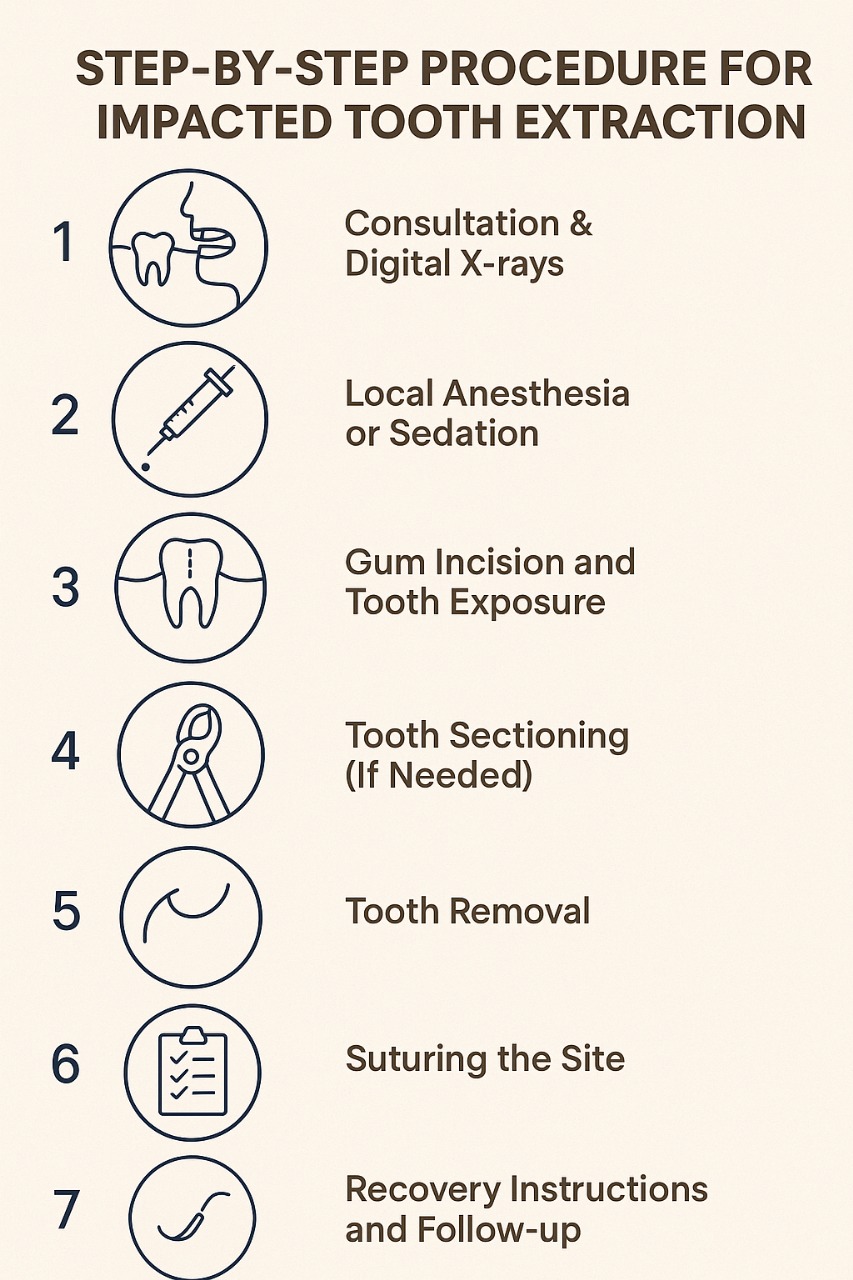
Step 1: Consultation & Digital X-rays
• The Oral surgeon takes a detailed dental and medical history before planning the surgical extraction of the impacted tooth/wisdom tooth.
• If the patient has any medical condition, such as Diabetes or hypertension, or if one is on any type of medication, then one needs to get a written medical consent from their respective specialist for surgical extraction.
• Complete blood reports are usually done before the procedure.
• A digital X-ray or CBCT scan is taken to see how the impacted tooth is positioned.
• During this step, one will be informed regarding what to expect before, during and after surgical procedure.
Step 2: Local Anesthesia injection
• Before the start of the procedure, the oral surgeon injects local anaesthetic solution to numb the affected area.
• The procedure is painless, but one may feel pressure, but not sharp pain.
Step 3: Gum Incision and Tooth Exposure
• The oral surgeon starts the procedure by making a small incision in the gum to expose the impacted tooth.
• If it’s a case of bony impaction, then removal of bone around the tooth may be required with the help of a dental drill.
• The surgical area is kept sterile and trauma to the surrounding tissue is minimized.
Step 4: Tooth Sectioning (If Needed)
• In case of a Horizontal or Bony impaction and if the impacted tooth is large or deeply impacted and difficult to extract, then tooth sectioning may be required
• Sectioning the tooth into small pieces makes it easier and safer to remove without affecting neighboring teeth.
Step 5: Tooth Removal
• Removal of the tooth or tooth sections is done by using specialized instruments
• The surgical area is checked for any left-over fragments. After that the area cleaned thoroughly to avoid any infection later.
Step 6: Suturing the Site
• The surgical site is closed using dissolvable or non-dissolvable sutures or stitches.
• A sterile gauze pad is placed on the site to control bleeding and aid in clot formation.
Step 7: Recovery Instructions and Follow-up
After the surgical procedure:
• The oral surgeon will guide the patient with post-extraction care instructions along with medication prescription (Pain killers, and antibiotics)
• A follow-up appointment after one week will be scheduled to monitor healing and remove stitches (if necessary).
It usually takes 30-60 minutes for the surgical extraction of an impacted tooth. The difficulty level and duration depends on following factors:
• The type of impaction (horizontal, angular, soft tissue, or bony)
• The position and depth of the tooth in the jawbone
• Whether the tooth needs to be sectioned (cut into smaller pieces)
For more complex cases like horizontal or bony impactions, the procedure may take slightly longer. The Oral surgeons at our clinic are quite experience and they ensure a safe, pain-managed experience using local anesthesia or conscious sedation(if required).
• Initial healing (reduction in pain and swelling): 3 to 5 days
• Soft tissue healing: 1 to 2 weeks
• Bone healing: Can take up to 6–8 weeks
One can typically return to light activities or work within 24–48 hours depending on the progress of recovery and comfort level. Proper aftercare plays a crucial role in faster healing and preventing complications like dry socket or infection.
Following are detailed home care instructions to promote healing and minimize discomfort after the surgical extraction of wisdom tooth/ impacted tooth.
Do’s:
• Bite down on gauze for 30–60 minutes after surgery to stop bleeding.
• Apply an ice pack on your cheek (15 minutes on, 15 minutes off) for the first 24 hours to reduce swelling.
• Take all prescribed medications (painkillers, antibiotics) exactly as directed.
• Keep your head elevated while sleeping to reduce swelling and bleeding.
• Stick to soft foods (Khichdi, soups, yogurt, mashed potatoes, smoothies) that is cool enough to not to harm the affected area. This diet has to be followed for the first 3-4 days.
• Take the prescribed medications after food for 5 days.
• Gently rinse with warm salt water (after 24 hours) 2–3 times daily to keep the area clean.
• Stay hydrated with plain water, sipping gently.
Don’ts:
• Do not spit, use a straw, or rinse vigorously in the first 24 hours (can dislodge blood clot and cause dry socket).
• Avoid smoking or alcohol for at least 72 hours post-op.
• Avoid hard, crunchy, or spicy foods that may irritate the site.
• Don’t touch or disturb the surgical area with your tongue or fingers.
No. The area is numbed with local anesthesia. You may feel pressure but not pain. Mild soreness after surgery is normal and can be managed with prescribed medications.
Initial healing takes about 3 to 5 days, and complete healing of the gums and bone may take 2 to 6 weeks.
Stick to soft, cold or lukewarm foods for 48 hours—such as smoothies, mashed potatoes, yogurt, or soup. Avoid hard, hot, and spicy foods.
You may return to work within 24 to 48 hours depending on how you feel. Avoid strenuous activities for a few days.
Dry socket is a painful condition where the blood clot gets dislodged from the extraction site. Prevent it by avoiding smoking, spitting, or using straws for 2–3 days.
The surgical procedure typically takes 30–60 minutes per tooth, depending on the complexity of the impaction.
No. If the tooth is fully erupted and not causing any problems, it may not require removal. However, impacted or partially erupted teeth often need surgical extraction to prevent future complications.